 Skip to content

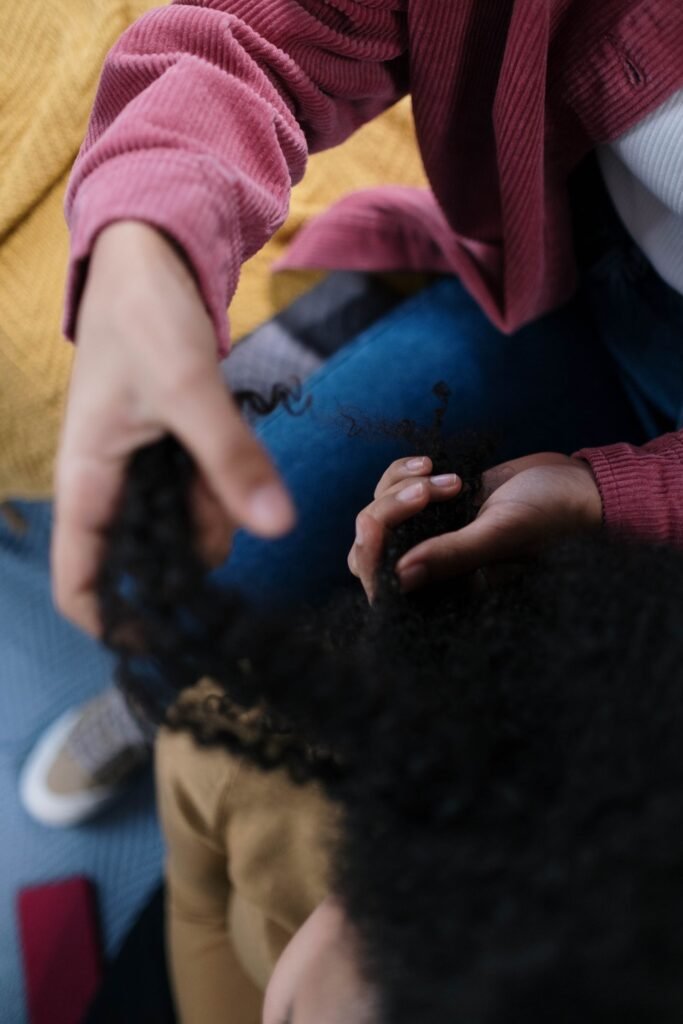
Wash day gets a bad reputation because most of us are doing it in the wrong order, with products that quietly work against each other. Done properly it is two hours, once a week, and the rest of the week takes care of itself.
This is the order we recommend to people in the shop, and why each step is where it is.
Before you wet anything: detangle dry
Most breakage on wash day happens in the first ten minutes, on hair that went straight from a week of shrinkage into water. Section the hair into four to six parts, work a little oil or a slippery conditioner through each, and finger-detangle from the ends upward before a comb ever touches it.
Keep the sections in place for the whole wash. Loose hair tangles on itself the moment it is wet, and every tangle you create now is one you have to pull through later.
Step 1 — Cleanse, but know which kind
There are two different jobs here and one shampoo rarely does both well.
A clarifying wash
Once a month, or whenever your hair feels coated, limp and refuses to absorb water. Nairobi dust and heavy butters build up faster than people expect. This is the reset.
A moisturising wash
Every other wash day. Gentler, usually sulphate-free, meant to clean the scalp without stripping the length.
Wash the scalp, not the length. Work the shampoo into the scalp with the pads of your fingers; let the run-off do the length as you rinse. Scrubbing the ends is how you turn a wash into a week of dryness.
Step 2 — Treat, and give it time
This is the step people rush, and it is the one that decides how the week goes. A deep treatment needs twenty to thirty minutes, and it needs warmth — a plastic cap and your own body heat is enough. Ten minutes under a running tap is a rinse-out conditioner wearing a costume.
If your hair has been snapping mid-strand rather than at the ends, you are usually looking at a protein need rather than a moisture one. Alternate: protein-leaning treatment one wash, a rich moisturising masque the next. Too much protein makes hair stiff and brittle; too little leaves it stretchy and limp. Your hair will tell you which way it is leaning if you pay attention to how a wet strand behaves when you pull it gently.
Step 3 — Define, on soaking wet hair
Curl cream goes on hair that is still dripping, not towel-dried. Water is the thing doing the moisturising; the cream is there to hold the water in place and set the pattern. Apply section by section, smooth down the length, then either rake or shingle depending on how defined you want it.
Do not touch it again until it is dry. Every touch while drying is frizz you are choosing.
Step 4 — Hold, or set
Foaming mousse for wraps, roller sets and braid-outs; a gel or custard if you want a harder cast that you break out later for definition without frizz. Both are optional — plenty of people stop at step three.
What a full wash day looks like from our shelves
- Cantu Shea Butter Deep Treatment Masque — the treat step
- Cantu Coconut Curling Cream — the define step
- Creme of Nature Pure Honey Curl Activator — moisture and slip
- Lottabody Wrap Me Foaming Mousse — the set
Between wash days
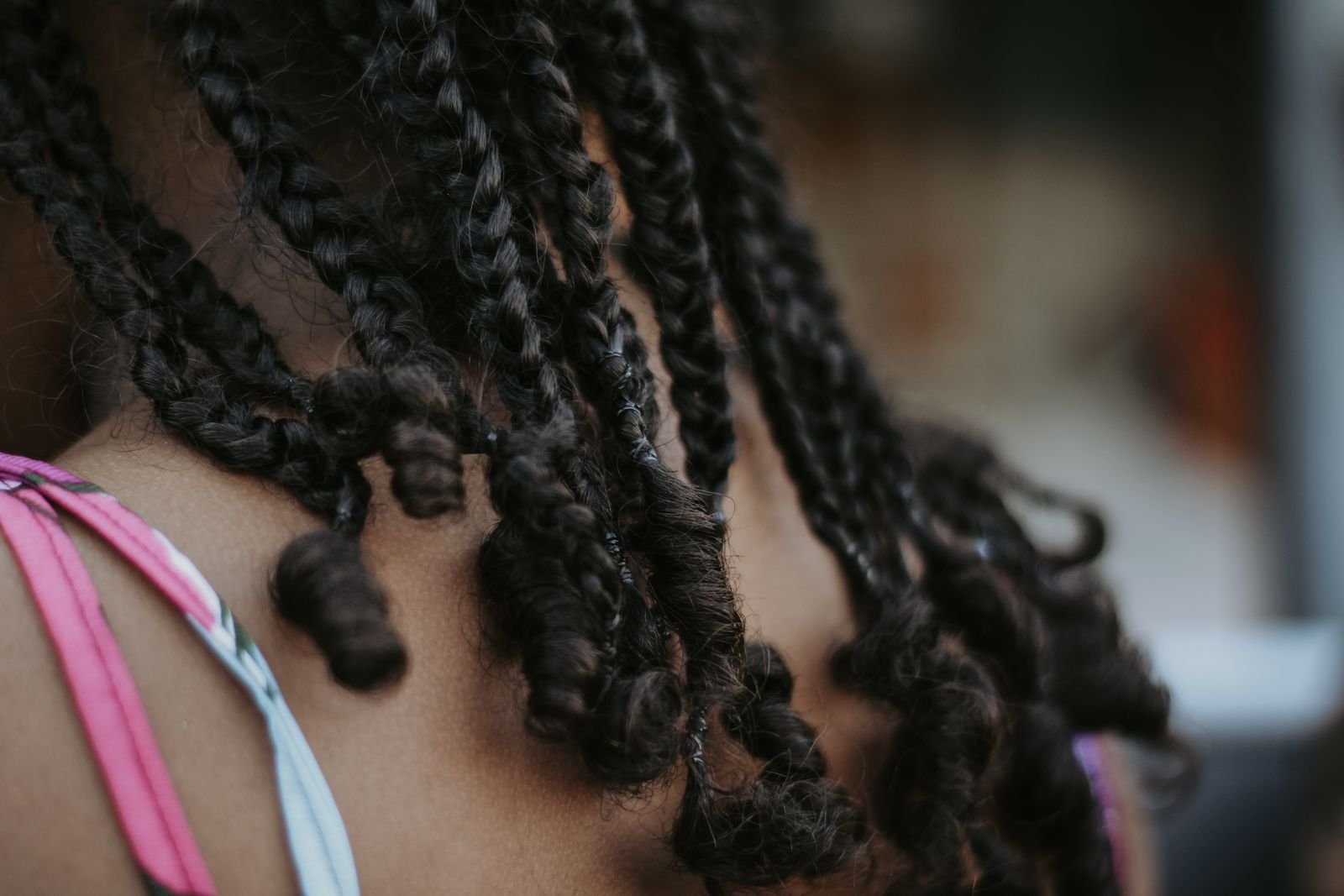
The week is simpler than the wash. Three habits carry most of it:
- Refresh with water first, product second. A spray bottle of water, then a little leave-in or oil to seal it. Oil on dry hair with no water underneath just sits there.
- Protect it at night. A satin scarf or bonnet is the cheapest hair product you will ever buy. Cotton pillowcases pull moisture out of hair and rough up the cuticle.
- Leave it alone. Low-manipulation styles — twists, braids, buns — for most of the week. Hair that is being handled daily is hair that is breaking daily.
The Nairobi-specific bits
Two things about the climate here that catch people out.
Hard water. Much of the city’s piped water carries enough mineral content to leave a film on hair over time — the same reason your kettle furs up. If your hair feels rough and dull no matter what you put on it, a clarifying wash once a month is usually the answer, not a new conditioner.
The dry season. Between roughly June and October, and again in January and February, the air holds much less moisture. Humectant-heavy products — anything leading with glycerin or honey — will pull water out of your hair rather than into it when the air is drier than your strands. In those months, lean on creams and butters and keep the humectants for the wet season.
Questions we get
How often should I wash?
Every seven to ten days for most people. More often if you exercise hard or use heavy products; less often if your scalp is dry and comfortable.
Do I need a different product for each of my children’s hair?
Usually not. Start with one gentle cleanser and one rich conditioner for the household and only branch out when a specific problem appears.
My hair is not growing.
It almost certainly is — it is breaking off at roughly the same rate it grows. Fix the breakage and the length appears. Protein-moisture balance, night protection and less manipulation do more for length than any growth oil.
If you would rather not assemble it product by product, our natural hair bundle is this whole routine in one go — masque, curling cream, activator and mousse — for less than buying the four separately. Free delivery across Nairobi on orders over KSh 3,000.
